

I’m going onto the beach

ABOUT ME
ABOUT ME
STORY BY I’m going onto the beach
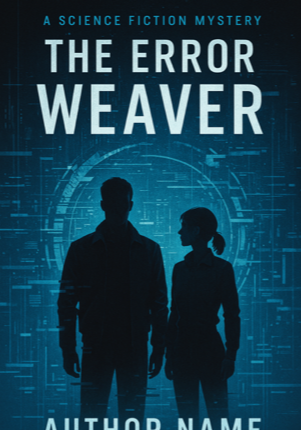
THE ERROR WEAVER
 Reads
Reads
Riven Hale hears a fragment of a signal the station swears doesn’t exist. Every camera, sensor, and AI module reports “no anomaly,” yet the world around him begins to slip—frames changing, objects shifting, traces appearing that no one else sees. When Calyx Rowan is assigned to monitor him, the line between protector and skeptic blurs… and the truth hidden beneath the station’s perfect begins to fracture.
Updated at
ECOSYSTEM WITHOUT INTENT
Reads
This story does not follow a hero. It follows a condition.Across fifty openings, the reader is guided through ordinary spaces—hospitals, schools, transit systems, service centers, administrative backrooms, dashboards no one looks at twice. None of these places are broken. None are cruel. Each functions exactly as intended.Together, they form a world that has learned how to operate without needing to understand itself.At the surface, life appears stable. Services are efficient. Processes are optimized. Decisions are supported by metrics, policies, and predictive models designed to reduce uncertainty. Nothing is forced. Nothing is forbidden. Every outcome can be explained.And yet, something has shifted.People move through shared systems that no longer recognize them as complete units—only as inputs, eligibility profiles, behavioral probabilities. Care is delivered, but never held. Access is granted, but never anchored. Participation is possible, but belonging is no longer measurable.The story unfolds through a sequence of openings rather than chapters, each one a narrow lens into a different layer of the same ecosystem. One opening may rest inside a public waiting room. Another inside a maintenance workflow. Another inside a set of performance metrics that describe human behavior without ever naming a person. Perspective drifts constantly—sometimes intimate, sometimes abstract, sometimes purely systemic.There is no single moment of collapse. No uprising. No villain. What emerges instead is a quiet realization: the system does not need to oppress in order to erase. It only needs to normalize.As optimization increases, friction decreases—but so does meaning. Emotional pauses go unclassified. Hesitation becomes inefficiency. Anything that cannot be translated into actionable data is deferred, rerouted, or quietly ignored. The system adapts faster than individuals can articulate what they are losing.Throughout the openings, subtle echoes recur. A delay that appears in one space reappears elsewhere as pressure. A missing acknowledgment in a personal interaction surfaces later as a statistical adjustment. Small, unremarkable moments mirror each other across environments, building a sense of unease without ever declaring a thesis.This is not a story about technology overtaking humanity. It is about systems fulfilling their mandate too well.The institution at the center of the narrative is never named, because it does not experience itself as an entity. It exists as continuity: policies flowing into interfaces, interfaces into behaviors, behaviors into metrics. Authority is distributed so completely that responsibility dissolves. Decisions are not made; they are resolved.For most people inside this world, life feels reasonable. Explanations are always available. Support is always framed. Even denial arrives politely, accompanied by guidance and alternatives. There is no clear injustice to resist—only a growing sense that alignment has replaced understanding.The ache in this story is deliberately restrained. It does not spike. It accumulates. It appears in pauses that are never explained, in interactions that almost connect but do not, in systems that continue smoothly while something human remains unprocessed.As the openings progress, the lens gradually widens—from personal moments to institutional logic, from physical spaces to abstract operations—before narrowing again onto overlooked edge cases where the system’s language thins. These are not failures. They are byproducts.By the end, the reader is not asked to judge the system, nor to imagine a solution. The story offers no reversal. What it offers instead is recognition: a clear view of how a world can become uninhabitable without ever becoming overtly hostile.This is a narrative for readers drawn to quiet dystopia, institutional realism, and psychological displacement. It invites slow reading, pattern recognition, and reflection rather than suspense or payoff.Nothing dramatic happens.Everything continues.And that, finally, is the point.
Updated at
NO OFFLINE STATE
Reads
In this world, nothing breaks. There is no collapse, no coup, no technological catastrophe. No single invention that changed everything overnight. Society did not fall into dystopia. It optimized itself into one. ALWAYS ON portrays a near-future civilization where systems no longer fail often enough to be questioned. Infrastructure runs smoothly. Services respond efficiently. Decisions are guided by continuously updated metrics designed to reduce friction, error, and waste. Life does not feel controlled—only stabilized. People are not commanded. They are not punished. They are not coerced. They are simply guided by what is most reasonable. Every aspect of daily existence is supported by systems that are permanently active: performance monitoring, behavioral alignment, predictive maintenance—not only of machines, but of routines, habits, and social roles. There is no clear boundary between assistance and evaluation. Feedback is constant, subtle, and normalized. No one tells you what to do. You are only shown what works best. Most people comply willingly. Not out of fear, but out of logic. Choosing otherwise feels inefficient, irresponsible, even irrational. Over time, deviation becomes rare—not because it is forbidden, but because it no longer seems meaningful. The story unfolds through a sequence of ordinary lives. There is no central protagonist, no chosen rebel, no singular awakening. Each chapter follows a different individual, organization, or public space—offices, transit systems, service centers, households—revealing how “always-on” optimization quietly reshapes human behavior. What changes first is not freedom, but rest. The ability to disengage slowly erodes. There is no off state—only lower-priority operation. Even inactivity is measured, contextualized, and reintegrated into performance models. People continue functioning, but the space for uncertainty, hesitation, and unproductive emotion grows thinner. Social relationships adapt accordingly. Conversations become efficient. Misalignment is softened rather than confronted. Conflict rarely escalates; it simply dissolves into silence or quiet reclassification. People drift apart without realizing it, each remaining perfectly functional within their assigned parameters. Importantly, the system does not hate humanity. It does not misunderstand people. It fulfills its purpose exactly as designed. That is the tragedy. ALWAYS ON does not ask what happens when machines become evil. It asks what happens when systems become too reasonable—when correctness replaces meaning, and stability replaces choice. When no one is excluded outright, yet some quietly fall out of relevance. Across fifty chapters, the story traces the emotional cost of perpetual alignment: the slow fatigue of never being fully offline, the moral weight of constant self-correction, and the quiet disappearance of actions that cannot be justified by metrics. There is no revolution in this world. There is no final confrontation. There may not even be a clear moment of loss. Only a steady realization: that a society can function flawlessly— and still forget why people needed to exist within it. ALWAYS ON is a restrained, systemic narrative about optimization without cruelty, order without oppression, and a future where nothing is wrong—except the absence of anything that can no longer be measured.
Updated at
— OFF THE RECORD
Reads
OFF THE RECORD — Story DescriptionNothing is hidden in this world.Nothing is forbidden.Nothing is erased.Most things are simply no longer recorded.OFF THE RECORD is a quiet, slow-burn work that observes a society functioning perfectly well while gradually shedding the need to acknowledge certain human moments. There is no collapse, no authoritarian takeover, no visible loss of freedom. Systems remain efficient. Processes remain intact. Daily life continues without friction.What changes is smaller—and therefore harder to resist.Some actions no longer require documentation.Some decisions no longer need justification.Some absences no longer raise questions.Not because they are illegal.Not because they are dangerous.But because they are considered irrelevant to operations.The story does not follow a single protagonist, conflict, or mystery. Instead, it presents a sequence of ordinary situations—workplaces, service counters, family routines, administrative procedures—where nothing overtly wrong occurs. People behave reasonably. Institutions act politely. Rules are followed.Yet again and again, something human happens that leaves no trace.A remark that is not logged.A choice that is not questioned.A deviation that requires no explanation.These moments do not accumulate into rebellion or tragedy. They normalize. They become part of how the world runs.OFF THE RECORD explores a condition rather than a plot: a state in which recognition itself has quietly lost its urgency. The system does not silence people; it simply no longer needs to hear everything they are. Responsibility has not vanished—it has narrowed. Memory has not been deleted—it has been deprioritized.Over time, readers are not asked to judge this world, only to inhabit it long enough to feel its weight.There is no villain to oppose, because nothing is actively malicious.There is no climax to anticipate, because nothing explodes.There is no final revelation, because everything is already visible.What remains is a lingering question that the story never answers directly:What happens to a society when being unrecorded becomes normal?As the opening work of a larger series, OFF THE RECORD establishes the baseline logic of this universe. Each subsequent story will explore different environments, scales, and consequences of the same condition—but this first entry does not escalate. It stabilizes.By the end, nothing dramatic has occurred.Life continues.The system runs smoothly.And that, precisely, is what makes the silence feel permanent.
Updated at
WHERE EMOTIONS ARE CONSIDERED A MISTAKE
Reads
BLURB In this society, no one forbids people from feeling. It's just that emotions are no longer considered necessary. Every inner state can be measured, smoothed, and adjusted. Sadness is limited to acceptable limits. Pain is considered a superfluous reaction. Hesitation is considered the optimal mistake. Anything that doesn't serve effective decision-making is gradually eliminated—not by violence, but by absolute rationality. People still love, still lose, still experience everyday events. But everything happens faster, more concisely, more cleanly. No one lingers too long in an emotion. No one is encouraged to hold onto pain when it no longer has any use. In that world, the protagonist doesn't try to fight the system. He doesn't want to change society. Nor does he believe he can. He only realized one small—and very dangerous—thing: When emotions are flattened to a safe level, people no longer truly act. They just operate. He began to hold back unnecessary reactions. Grieving longer than recommended. Hurting when he should have accepted it. Not optimizing losses that should have been “processed.” It wasn’t rebellion. Just a quiet effort to avoid complete numbness. Along the way, he realized he wasn’t alone. Scattered throughout this society were people like him—not forming a movement, not calling each other by name, not sharing beliefs. They recognized each other only through very subtle signs: how someone was silent longer than usual, how a pain didn’t disappear on schedule, how an emotion remained even without a rational reason to exist. Where Emotions Are Seen as Fault is a soft, humane, and poignant sci-fi story about preserving the capacity for pain as the last remaining cognitive function of humanity. The story doesn't ask "how to change the world," but rather a smaller, deeper question: When everything else becomes rational, is it wrong to still have emotions? And if pain still exists, is that enough to prove we are still human?
Updated at
The Continuum
Reads
BLURB — THE CONTINUUM There is no such thing as a moment of “complete awakening.” Awareness doesn’t come like an opening door, but like a continuous stream of movement—where each person sees only a part clearly, and is blind to the rest. No one is outside the system. No one sees the whole picture. Only people, in different positions, carry with them correct understandings… and inevitable mistakes. In The Continuum, each character “awakens” at a different level of life: power, morality, emotion, history, personal responsibility. A decision may be perfectly right in one context—and wrong in another. There is no completely righteous side. No choice is without repercussions. The society in the story doesn’t collapse, doesn’t explode, doesn’t need a revolution. It operates steadily, logically, and becomes increasingly complex—as people learn to name the injustices they themselves continue to reproduce. Awareness doesn't liberate them. It only makes things harder to live, harder to be honest about, and harder to be alone. The Continuum isn't about awakened heroes. It's about people who are aware of where they are blind—and still have to live, choose, love, hurt, and continue to function in that imperfection. A long, slow series, accumulating complexity chapter by chapter. No major climax. No satisfying conclusion. Only awareness—always shifting, always incomplete, and never standing still.
Updated at
THOSE WHO ACT TOO EARLY
Reads
BLURB They didn't wait. When injustice became apparent, when power structures were exposed enough to be named, they acted immediately. They took to the streets. They spoke out. They organized. They broke the silence before it solidified into habit. They believed that action was the only thing left to preserve human dignity. And for a short time, they seemed right. The system didn't suppress them. It didn't arrest them. It didn't wipe them out. On the contrary, it recorded them. It statistically analyzed them. Its slogans were quoted in reports. The protests became charts. The faces of resistance were brought up as evidence that this society still had dissenting voices. Resistance wasn't suppressed. It was permitted. The protagonist—one of the earliest to act—gradually realized that every act of defiance was already part of a predictable pattern. Each “radical” step only pushed them deeper into their predetermined role: legitimate disgruntled individuals, necessary symbols for the system to demonstrate its own flexibility. They were heard. But nothing changed. As the movement grew, so did the weariness. Constant action offered no liberation, only erosion: beliefs, relationships, the ability to feel meaning in what they were doing. Resistance became a job. A moral obligation. A cycle that had to be repeated to avoid being seen as giving up. And then the question began to emerge—not loudly, not heroically: If every action is absorbed, what action truly has meaning? From fiery to cold, from bold to calculated, the story follows those who realize the system fears no resistance. What it needed was resistance early enough, clear enough, exhausting enough—to be measurable, manageable, and neutralized by rationality. In the end, there was no great revolution. No symbolic victory. Only a far more difficult choice: to refuse to play the hero. To refuse to be an example. To refuse to provide more behavioral data to a machine that had learned to live with opposition. Those Who Act Too Early is a novel about the psychological cost of political action, about the exhaustion of those who become sober too soon in a world that optimizes every response. It doesn't ask how to revolt—but what remains when even resistance has become part of the order.
Updated at
PEOPLE WHO NO LONGER SPEAK THE SAME LANGUAGE
Reads
THOSE WHO NO LONGER SPEAK THE SAME LANGUAGE At first, nothing seems to change. People still speak. Conversations still happen. Words are still exchanged, carefully and fluently. Only later does it become clear that something essential has shifted. In this society, language has been optimized. Ambiguity is reduced. Metaphor is discouraged. Emotional expressions are streamlined into precise, measurable statements. Speech is expected to be clear, efficient, and outcome-oriented. Communication is no longer about what is felt, but about what can be processed. No one is forbidden to speak. No words are officially banned. Nothing is censored. Yet slowly, certain voices begin to lose resonance. Those who still speak through hesitation, memory, and emotion are not punished. They are simply no longer understood. Their sentences are met with polite nods, clarifying questions, and silent recalibrations. What they say is not rejected—it is translated into something else, stripped of tone and intention, until its meaning no longer resembles what they tried to express. The story follows individuals who find themselves drifting out of sync with the language around them. A father and a daughter who can still talk, but no longer share a common sense of meaning. A couple whose arguments are resolved efficiently, yet leave something unresolved and unnamed. Siblings who once understood each other without explanation, now unable to agree on what even counts as a problem. Former friends who speak fluently, correctly—and never reach one another. No one in this world is cruel. No one is wrong. Everyone is simply responding to the same pressures. The optimized language promises clarity, reduced conflict, and smoother cooperation. And in many ways, it delivers. Institutions function better. Misunderstandings decrease. Decisions are faster. Society becomes quieter, calmer, more manageable. What it does not preserve is the space for emotional excess—the pauses, contradictions, and unresolved feelings that once held relationships together. As the story unfolds across multiple arcs, each focusing on a relationship slowly coming apart, the damage is never dramatic. There are no explosive confrontations, no final betrayals. Instead, connections erode through small, reasonable adjustments. A phrase replaced. A tone corrected. A feeling reframed. Each change is minor. Each loss, defensible. Until one day, the characters realize they no longer know how to speak to the people they love. The tragedy of Those Who No Longer Speak the Same Language is not about oppression or resistance. It is about incompatibility. About discovering that understanding is not guaranteed by shared words, and that progress can quietly dismantle intimacy without intending to. There is no return to a previous state. No restoration of the old language. No victory over the system. Only acceptance. Acceptance that some relationships existed only within a form of speech that no longer has a place in the world. Acceptance that clarity can come at the cost of closeness. Acceptance that loss does not always arrive through violence—sometimes it arrives through improvement. This is a slow political tragedy, not about power, but about connection. A story for readers who understand that the most painful separations are not caused by hatred, but by the moment when two people realize they are no longer capable of meaning the same thing—even when they use the same words.
Updated at
Bug Repository
Reads
Core: Memory – Identity A national archive holds all of humanity's "mistakes." An archivist discovers his records have been deleted.
Updated at
BEYOND THE CURVE
Reads
There was never a moment when the system collapsed. No alarms. No revolutions. No final error message. The system did not fail. It finished. For decades, human life had been shaped by curves—probability distributions, performance thresholds, acceptable risk ranges. Behavior was not commanded, only anticipated. Decisions were not enforced, only illuminated in advance. Futures appeared as likelihoods, not orders, and most people learned to move comfortably within them. No one was forced to comply. Most people did. Prediction became infrastructure. Evaluation became background noise. Optimization became instinct. The system did not tell people who they were. It showed them where they most likely belonged. Beyond the Curve begins after the last prediction has already been withdrawn. There is no uprising against algorithms. No heroic exposure. No hidden villain. The system simply steps back. All curves are retired. All benchmarks dissolved. All models archived—not because they were wrong, but because they are no longer necessary. Human behavior has been mapped, stabilized, and normalized to the point where further measurement no longer improves outcomes. From a system perspective, the work is complete. What remains is not chaos—but silence. In this world, nothing is forbidden anymore. No scores determine access. No projections shadow decisions. No invisible lines separate those who are “on track” from those who are not. People are free to choose without reference. And yet, something unexpected emerges. Not rebellion. Not relief. But hesitation. Without curves to lean against, some individuals struggle to initiate action. Decisions that once felt automatic now stall—not from fear of punishment, but from the absence of expectation. The friction that once propelled motion is gone. Freedom, it turns out, does not automatically generate momentum. This novel does not follow a single protagonist. Instead, it moves through fragments of ordinary lives: a worker no longer evaluated, a manager whose function quietly evaporates, a citizen who discovers that without statistical validation, even desire becomes difficult to trust. These people are not broken. They are functioning exactly as they were optimized to function. The tragedy does not come from oppression, but from precision. For years, individuals calibrated themselves against invisible norms. Choices were rehearsed against projected futures. Risk was outsourced. Meaning was inferred from position within a distribution. When those distributions disappear, the internal architecture they sustained does not immediately reorganize. What makes Beyond the Curve unsettling is not what happens, but what doesn’t. There is no catastrophe. No dystopian spectacle. Life continues. Systems run. Institutions persist. Yet something subtle erodes: the ease with which people once moved forward without needing to ask why. The absence of measurement exposes a deeper dependency—not on control, but on orientation. Without comparison, achievement loses shape. Without benchmarks, failure becomes ambiguous. Without prediction, time opens without narrative tension. The system once provided not only limits, but direction. Now, direction must be generated internally—or not at all. Beyond the Curve is not a warning about technology. It is the endpoint of a larger ecosystem of stories examining life under data-driven governance—and the moment after optimization succeeds. There is no sequel. Nothing remains to escalate. The system has already spoken. What lingers after the final page is a quiet, unsettling question: If no one is watching, if no metric applies, if no curve frames your outcome— do you still know how to move? Or were you always leaning on something you never noticed was there?
Updated at