

lunaandrew0001

ABOUT ME
ABOUT ME
STORY BY lunaandrew0001
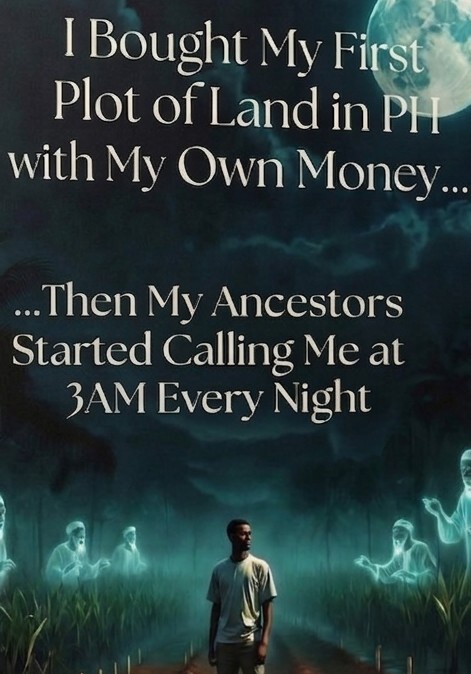
I bought my first plot of land in Port Harcourt with my own money... and that was the day my nightmare began. 🖋️🏗️
 Reads
Reads
Paper is not the only truth."Amara Okoloba is a 29-year-old relationship manager in Port Harcourt who has done everything right. She saved every kobo, avoided the loud lifestyle, and finally achieved the ultimate Nigerian dream: buying a dry, well-located plot of land in Elelenwo with her own hard-earned cash. But the celebration is short-lived. Three days after the purchase, the 3:00 AM calls begin. It starts with an unknown number and a chilling voice note from an old woman who shouldn't know her name. Soon, her generator begins to fail, and her friends claim they see a shadow standing beside her that isn't there. As the messages become more urgent, Amara discovers a terrifying truth: the land she bought isn't just property—it has a history of blood that the estate agents "forgot" to mention. In a city where land is power, Amara is about to learn that some ownership comes with consequences no one warns you about. Will she be able to silence the voices before the ground claims her too?
Updated at
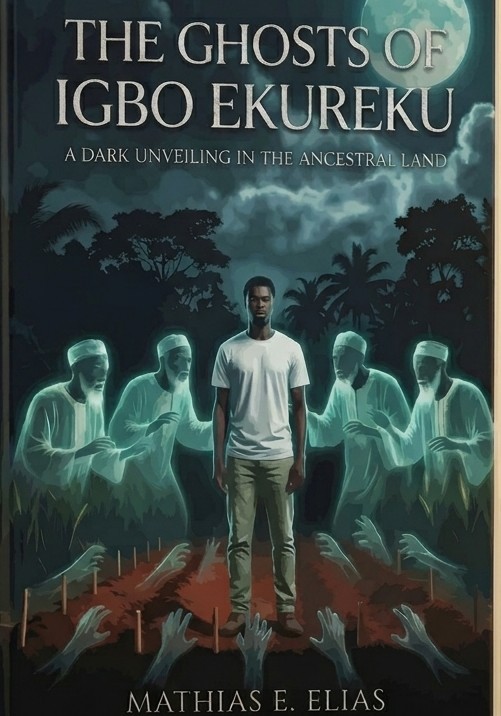
The ghost of igbo ekureku
Reads
Mathias Elias Etoroko was a son of the soil with the city calling his name. But Port Harcourt is a tough teacher. After months of walking hot streets until his shoes wore thin, Mathias faced a mountain he couldn't climb with bare hands—until he found the "Ghost in the Machine." Follow the gripping true story of a young man who:Left the quiet nights of the village for the bright lights of PH. Survived on the grit and hope of a shared one-room apartment. Bridged the gap between rural life and global success using modern technology. When the first "Alert" hits, it isn't just money—it’s the sound of a limit finally breaking.
Updated at
Mathias Elias Etoroko was a son of the soil with the city calling his name. But Port Harcourt is a tough teacher. After months
Reads
Mathias Elias Etoroko was a son of the soil with the city calling his name. But Port Harcourt is a tough teacher. After months of walking hot streets until his shoes wore thin, Mathias faced a mountain he couldn't climb with bare hands—until he found the "Ghost in the Machine." Follow the gripping true story of a young man who:Left the quiet nights of the village for the bright lights of PH. Survived on the grit and hope of a shared one-room apartment. Bridged the gap between rural life and global success using modern technology. When the first "Alert" hits, it isn't just money—it’s the sound of a limit finally breaking.
Updated at
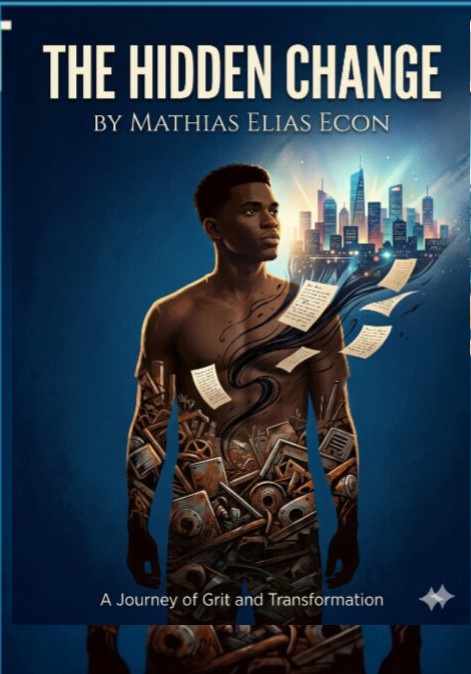
The Hidden Change
Reads
December 2017 did not feel like Christmas.It came with a kind of cold that had nothing to do with harmattan wind or the dry sting of dust against the skin. This one sat deeper—inside the chest, in the silence between words, in the spaces where laughter used to live.Mathias Elias Econ noticed it first in the evenings.Exactly around 6:45 pmIn Lagos, evenings were never quiet. Even when there was no light, there was always noise—generators coughing to life, distant music from a neighbor’s radio, women calling out to children who refused to come inside, and the constant hum of survival. Life, no matter how hard, always moved and interesting.But that December, something shifted.“Omo, pack your things,” his mother said one afternoon, her voice steady but tired. “We’re going to Ogun first… then we’ll see.”Mathias didn’t ask questions. He had learned early that sometimes, questions only made things heavier.The room they lived in was small—too small for a family of six—but it held memories that stretched beyond its walls. Chris was folding clothes in a hurry, his movements sharp like someone trying not to think too much. Mercy and Destiny were arguing over which slippers to carry. The youngest, not yet born, was still a quiet hope inside their mother.Mathias stood by the door, watching.Observing but dint say a word.“Where is Daddy?” he finally asked, his voice low, almost like he was afraid the question itself might break something.His mother paused.Just for a second.“He’s working,” she said, tying a wrapper around her waist. “You know how it is.”But Mathias knew.Or at least, he felt it.His father had been working more than usual—selling calendars under the hot sun,Then finally got a job , standing long hours as a security guard at night. Jobs came and went like harmattan breeze. One minute, there was something. The next, nothing.And now… he wasn’t there.The journey to Ogun State was quiet.They squeezed into a bus that smelled of sweat, petrol, and old leather. Mathias sat by the window, his head resting against the glass as Lagos slowly faded behind them—its chaos, its noise, its stubborn life. Omo (he sighed)He watched as the tall buildings gave way to smaller houses, then open land.Something about it felt like leaving a part of himself behind.“Omo, you’re too quiet,” Chris nudged him.“I’m fine,” Mathias replied, forcing a small smile.But he wasn’t.That evening in Ogun, the cold became strong and real .Not the kind that made you shiver and laugh, running to find a sweater. This one crept into their bones. The house they stayed in was unfamiliar, rented, temporary. The walls felt distant, like they didn’t recognize them.There was no electricity.No noise.Just silence.Mathias sat outside on a wooden bench, hugging his knees as the wind brushed against his skin. Somewhere in the distance, a dog barked. The sky was wide, too wide, like it was exposing something he wasn’t ready to see.His mother came out, holding a small bowl of garri and groundnuts.“Come chop ,” she said gently.He took it, his fingers brushing against hers. They were rough—evidence of long days under the sun, hawking, pushing, surviving.“Mummy…” he started, then stopped.She looked at him.For a moment, her strength cracked.Just a little.“We’ll be okay,” she said, but this time, it sounded like she was convincing herself too.Mathias nodded.But inside, something tightened.Life was hitting hard ,very hard to the extent of giving up .And he didn’t understand why.A few days later, they moved again.This time, to the village.The journey felt longer, heavier. Roads became rougher, conversations fewer. By the time they arrived, it was evening again—the same kind of evening that carried that strange, unsettling cold.The village was different. Things were no longer as before.Quiet in a way that felt loud.People greeted them—“Who goes there?” voices called from a distance, half curious, half cautious.“Na we,” Chris responded.Mathias stayed close to his mother, his eyes scanning everything. The houses were older, the air thicker, the nights darker.That first night, he couldn’t sleep.He lay on a thin mat, staring at the ceiling, listening to the unfamiliar sounds—the chirping of insects, the whisper of wind through trees, the occasional rustle that made his heart beat faster.He turned to his side.Chris was already asleep.Mercy and Destiny were curled up together.His mother lay quietly, her back facing him.And his father…Still wasn’t there.Mathias swallowed hard, blinking back tears.He didn’t cry out loud.He never did.Instead, he let the tears fall silently, disappearing into the thin pillow beneath his head.In that moment, he understood something, even if he couldn’t fully explain it.Life was no longer the same.The Lagos noise, the small room, even the struggles—they suddenly felt like a kind of comfort compared to this unknown silence. It didn’t come with the chaos of Lagos or the quiet weight of the village. Instead, it sat somewhere in between—like a city watching
Updated at