20 books
-
1. Man and Maid
(1922) When all of me is aching--Shall I too, find solace if I go to the sea? Who knows?--Chapter 1
-
2. The Career of Katherine Bush
(1916) Illustrated by Edmund Frederick Dusk was coming on when Katherine Bush left the office of the Jew money lenders, Livingstone and Devereux, in Holles Street. Theirs was a modest establishment with no indication upon the wire blind of the only street window as to the trade practised by the two owners of the aristocratic names emblazoned upon the dingy transparency. But it was very well known all the same to numerous young bloods who often sought temporary relief within its doors. Katherine Bush had been the shorthand typist there since she was nineteen. They paid her well, and she had the whole of Saturday to herself. She sat clicking at her machine most of the day, behind a half-high glass screen, and when she lifted her head, she could see those who came to the desk beyond-she could hear their voices, and if she listened very carefully, she could distinguish the words they said. In the three years in which she had earned thirty shillings a week sitting there, she had become quite a connoisseur in male voices, and had made numerous deductions therefrom. "Liv" and "Dev," as Mr. Percival Livingstone and Mr. Benjamin Devereux, were called with undue familiarity by their subordinates, often wondered how Katherine Bush seemed to know exactly the suitable sort of letter to write to each client, without being told. She was certainly a most valuable young woman, and worth the rise the firm meant to offer her shortly. She hardly ever spoke, and when she did raise her sullen greyish-green eyes with a question in them, you were wiser to answer it without too much palaver. The eyes were darkly heavily lashed and were compelling and disconcertingly steady, and set like Greek eyes under broad brows. Her cheeks were flat, and her nose straight, and her mouth was full and large and red.--Chapter 1
-
3. High Noon
FOREWORD --I must make a confession. It will not be needed by the many thousands who have lived with me the wonderful sunrise of Paul's love, and the sad gray morning of his bereavement. To these friends who, with Paul, loved and mourned his beautiful Queen and their dear son, the calm peace and serenity of the high noon of Paul's life will seem but well-deserved happiness. It is to the others I speak. In life it is rarely given us to learn the end as well as the beginning. To tell the whole story is only an author's privilege. Of the events which made Paul's love-idyl possible, but a mere hint has been given. If at some future time it seems best, I may tell you more of them. As far as Paul himself is concerned, you have had but the first two chapters of his story. Here is the third of the trilogy, his high noon. And with the sun once more breaking through the clouds in Paul's heart, we will leave him. You need not read any more of this book than you wish, since I claim the privilege of not writing any more than I choose. But if you do read it through, you will feel with me that the great law of compensation is once more justified. As sorrow is the fruit of our mistakes, so everlasting peace should be the reward of our heart's best endeavor. Sadness is past; joy comes with High Noon. "The Queen is dead. Long live the Queen!"--The Author.
-
4. One Day
(1909) The first sequel to Elinor Glyn's best-selling novel Three Weeks. The second sequel being High Noon (1911). FOREWORD TO MY AMERICAN FRIENDS Now after spending some very pleasant weeks in your interesting country, I feel sure that this book will find many sympathetic readers in America. Quite naturally it will be discussed; some, doubtless, will censure it-and unjustly; others will believe with me that the tale teaches a great moral lesson. Born as the Boy was born, the end which Fate forced upon him, to me, was inevitable. Each word and act of the three weeks of his parents' love-idyl must reflect in the character and life of the child. Little by little the baby King grew before my mental vision until I saw at last there was no escape from his importunity and I allowed the insistent Boy-masterful even from his inception-to shape himself at his own sweet will. Thus he became the hero of my study. This is not a book for children or fools-but for men and women who can grasp the underlying principle of morality which has been uppermost in my mind as I wrote. Those who can see beyond the outburst of passion-the overmastering belief in the power of love to justify all things, which the Boy inherited so naturally from his Queen mother-will understand the forces against which the young Prince must needs fight a losing battle. The transgression was unavoidable to one whose very conception was beyond the law-the punishment was equally inevitable. In fairness to this book of mine-and to me-the great moral lesson I have endeavored to teach must be considered in its entirety, and no single episode be construed as the book's sole aim. The verdict on my two years' work rests with you, dear Reader, but at least you may be sure that I have only tried to show that those who sow the wind shall reap the whirlwind.--The Author.
-
5. The Price of Things
(1919) FOREWORD--I wrote this book in Paris in the winter of 1917-18--in the midst of bombs, and raids, and death. Everyone was keyed up to a strange pitch, and only primitive instincts seemed to stand out distinctly. Life appeared brutal, and our very fashion of speaking, the words we used, the way we looked at things, was more realistic--coarser--than in times of peace, when civilization can re-assert itself again. This is why the story shocks some readers. I quite understand that it might do so; but I deem it the duty of writers to make a faithful picture of each phase of the era they are living in, that posterity may be correctly informed about things, and get the atmosphere of epochs. The story is, so to speak, rough hewn. But it shows the danger of breaking laws, and interfering with fate--whether the laws be of God or of Man. It is also a psychological study of the instincts of two women, which the strenuous times brought to the surface. "Amaryllis," with all her breeding and gentleness, reacting to nature's call in her fierce fidelity to the father of her child--and "Harietta," becoming in herself the epitome of the age-old prostitute. I advise those who are rebuffed by plain words, and a ruthless analysis of the result of actions, not to read a single page.--Elinor Glyn
-
6. Beyond The Rocks
A Love Story. (1906) This novel of torrid love was made into a film in 1922 starring Rudolph Valentino. Josiah Brown's valet, Mr. Toplington, who knew the world, had engaged rooms for the happy couple at the Grand Hotel. "We'll go to the Ritz on our way back," he decided, "but at first, in case there's scenes and tears, it's better to be a number than a name." Mademoiselle Henriette, the freshly engaged French maid, quite agreed with him. The Grand, she said, was "plus convenable pour une lune de Miel--" Lune de Miel!--Chapter 1
-
7. The Letters of Her Mother to Elizabeth
(1901) NOTE: Everyone who has read "The Visits of Elizabeth," in which a girl of seventeen describes her adventures to her mother in a series of entertaining and clever letters, has instinctively asked the question: "What sort of woman was Elizabeth's Mother?" Perhaps an answer that will satisfy all will be found in the following Letters of her Mother to Elizabeth.
-
8. Quel certo non so che
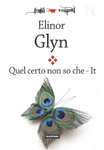
John e Ava. Lui è un ricco uomo d'affari partito dai bassifondi, lei una donna affascinante dell'alta società che ha conosciuto la povertà e la decadenza. John è segretamente attratto da Ava. Ava è innamorata di John ma non osa dichiararsi, non può essere all'altezza di un uomo di successo come lui. In una New York da sogno, una splendida storia d'amore fra due esseri uguali e diversi, entrambi dotati di Quel certo non so che che distingue la bellezza fine a se stessa dal fascino irresistibile. Un romanzo dolce e sensuale, carico di atmosfere uniche, opera di una delle scrittrici più famose del genere rosa: Elinor Glyn
-
9. Tre settimane (Three Weeks)

Due occhi impossibili da dimenticare... E una donna unica, un corpo da amare e una mente nella quali perdersi. Un labirinto di sogni, una strada obbligata che conduce alla felicità, alla passione. È quella che percorre il giovane Paul, travolto dal suo sentimento, non subito corrisposto, per la bellissima e meno giovane "signora in nero". Lei, così misteriosa, viaggia in incognito, e non è una donna qualunque. E Paul non può fare a meno di giocare fino in fondo la sua partita contro il destino, un tragico gioco che li coinvolgerà entrambi annientandoli. Tutto in tre, interminabili settimane. Three Weeks, considerato il capolavoro di Elinor Glyn, romanzo di grande successo, è un viaggio senza ritorno nella passione più totale ed esclusiva. Viene riproposto per la prima volta in edizione integrale e in una nuova traduzione.
-
10. Three Weeks
I feel now, when my "Three Weeks" is to be launched in a new land, where I have many sympathetic friends, that, owing to the misunderstanding and misrepresentation it received from nearly the entire press and a section of the public in England, I would like to state my view of its meaning. (As I wrote it, I suppose it could be believed I know something about that!) For me "the Lady" was a deep study, the analysis of a strange Slav nature, who, from circumstances and education and her general view of life, was beyond the ordinary laws of morality. If I were making the study of a Tiger, I would not give it the attributes of a spaniel, because the public, and I myself, might prefer a spaniel! I would still seek to portray accurately every minute instinct of that Tiger, to make a living picture. Thus, as you read, I want you to think of her as such a study. A great splendid nature, full of the passionate realisation of primitive instincts, immensely cultivated, polished, blas . You must see her at Lucerne, obsessed with the knowledge of her horrible life with her brutal, vicious husband, to whom she had been sacrificed for political reasons when almost a child. She suddenly sees this young Englishman, who comes as an echo of something straight and true in manhood which, in outward appearance at all events, she has met in her youth in the person of his Uncle Hubert. She perceives in him at once the Soul sleeping there; and it produces in her a strong emotion. Then I want you to understand the effect of Love on them both. In her it rose from caprice to intense devotion, until the day at the Farm when it reached the highest point-a desire to reproduce his likeness. How, with the most passionate physical emotion, her mental influence upon Paul was ever to raise him to vast aims and noble desires for future greatness. In him love opened the windows of his Soul, so that he saw the fine in everything. The immense rush of passion in Venice came from her knowledge that they soon must part. Notice the effect of the two griefs on Paul. The first, with its undefined hope, making him do well in all things-even his prowess as a hunter-to raise himself to be more worthy in her eyes; the second and paralysing one of death, turning him into adamant until his soul awakens again with the returning spring of her spirit in his heart, and the consolation of the living essence of their love in the child. The minds of some human beings are as moles, grubbing in the earth for worms. They have no eyes to see God's sky with the stars in it. To such "Three Weeks" will be but a sensual record of passion. But those who do look up beyond the material will understand the deep pure love, and the Soul in it all, and they will realise that to such a nature as "the Lady's," passion would never have run riot until it was sated-she would have daily grown nobler in her desire to make her Loved One's son a splendid man. And to all who read, I say-at least be just! and do not skip. No line is written without its having a bearing upon the next, and in its small scope helping to make the presentment of these two human beings vivid and clear. The verdict I must leave to the Public, but now, at all events, you know, kind Reader, that to me, the "Imperatorskoye" appears a noble woman, because she was absolutely faithful to the man she had selected as her mate, through the one motive which makes a union moral in ethics-Love.-ELINOR GLYN.
-
11. The Reason Why
(1911) People often wondered what nation the great financier, Francis Markrute, originally sprang from. He was now a naturalized Englishman and he looked English enough. He was slight and fair, and had an immaculately groomed appearance generally--which even the best of valets cannot always produce. He wore his clothes with that quiet, unconscious air which is particularly English. He had no perceptible accent--only a deliberate way of speaking. But Markrute!--such a name might have come from anywhere. No one knew anything about him, except that he was fabulously rich and had descended upon London some ten years previously from Paris, or Berlin, or Vienna, and had immediately become a power in the city, and within a year or so, had grown to be omnipotent in certain circles. He had a wonderfully appointed house in Park Lane, one of those smaller ones just at the turn out of Grosvenor Street, and there he entertained in a reserved fashion.--Chapter 1
-
12. The Man and the Moment
(1914) Michael Arranstoun folded a letter which he had been reading for the seventh time, with a vicious intentness, and then jumping up from the big leather chair in which he had been buried, he said aloud, "Damn!" When a young, rich and good-looking man says that particular word aloud with a fearful grind of the teeth, one may know that he is in the very devil of a temper!--Chapter 1
-
13. Sei giorni
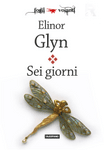
Chi sposerà la bella e indolente Laline, giovane ed esigente figlia dell’altà società americana? Il prevedibile, ricco e premuroso Jack, voluto dall’onnipresente zia, con il suo carattere accomodante e il suo affetto privo di sussulti? La prima visita della ragazza in Europa, a bordo del più grande transatlantico di quei tempi, il mitico Olympic, gemello del più famoso Titanic, chiarirà per sempre il suo futuro. Nell’atmosfera unica e romantica della traversata oceanica, Laline conoscerà per la prima volta il vero amore e l’uomo della sua vita, lo scontroso David Lamont. Ma il destino non sarà benevolo con loro, in un crescendo di colpi di scena che metterà in pericolo le loro stesse vite. Tutto in sei indimenticabili giorni e con un sorpredente, cinematografico colpo di scena finale. Capolavoro di Elinor Glyn, una delle regine del genere sentimentale d'autore.
-
14. His Hour
(1910) With grateful homage and devotion I dedicate this book to Her Imperial Highness The Grand Duchess Vladimir Of Russia, In memory of the happy evenings spent in her gracious presence when reading to her these pages, which her sympathetic aid, in facilitating my opportunities for studying the Russian character, enabled me to write. Her kind appreciation of the finished work is a source of the deepest gratification to me.--Elinor Glyn, St. Petersburg, May, 1910
-
15. Halcyone
(1912) TO THE MEMORY OF MY KIND FRIEND LORD ST. HELIER, WHOSE SYMPATHY WITH MY CLASSICAL STUDIES SO GREATLY ENCOURAGED THEM. "And now they are past the last blue headland and in the open sea; and there is nothing round them but the waves and the sky and the wind. But the waves are gentle and the sky is clear, and the breeze is tender and low; for these are the days when Halcyone and Ceyx build their nest and no storms ever ruffle the pleasant summer sea. And who were Halcyone and Ceyx? Halcyone was a fairy maiden, the daughter of the beach and of the wind. And she loved a sailor-boy and married him; and none on earth were so happy as they. But at last Ceyx was wrecked; and before he could swim to the shore, the billows swallowed him up. And Halcyone saw him drowning and leapt into the sea to him; but in vain. Then the Immortals took pity on them both, and changed them into two fair sea-birds, and now they build a floating nest every year and sail up and down for ever upon the pleasant seas of Greece."--from The Heroes, Charles Kingsley.
-
16. Elizabeth Visits America
(1909) This is the second novel in Glyn's "Elizabeth" Series, the other being The Visits of Elizabeth (1900). Preface: After a few years of really perfect domestic bliss Elizabeth and her "Harry" had a rather serious quarrel, which ended in Lord Valmond's going off to shoot big game in the wilds of Africa, leaving Elizabeth, who (in the absence of her mother and her favourite cousin, Octavia, abroad) had taken refuge with her great aunt Maria at Heaviland Manor, in an obstinate and disconsolate frame of mind. Lord Valmond was two days out on his voyage when Elizabeth wrote to her parent:....Preface
-
17. The Reflections of Ambrosine
(1903) NOTE--In thanking the readers who were kind enough to appreciate my "Visits of Elizabeth," I take this opportunity of saying that I did not write the two other books which appeared anonymously. The titles of those works were so worded that they gave the public the impression that I was their author. I have never written any book but the "Visits of Elizabeth." Everything that I write will be signed with my name,--ELINOR GLYN
-
18. Three Things
I have called this little collection of articles which I have written "THREE THINGS" because to me there seem to be just three essentials to strive after in life. Truth--Common Sense and Happiness. To be able to see the first enables us to employ the second, and so realise the third. And in these papers I have tried to suggest some points which may be of use to others who, like myself, are endeavouring to reason out ideas to a good end. How often one sees people who could be very happy, and who yet with incredible blindness and stupidity are running their heads against stone walls (or feather beds!) and destroying all chance of peace for themselves, their mates, and their households! Everything is very simple when it is analysed down to what nature meant in the affair--and by doing this one gets a broader perspective. For instance, nature meant one thing in the connection of man and woman--and civilisation has grafted quite another meaning into it, and the two things are often at war in the State called marriage! In the chapters devoted to this subject I have tried to exploit some points which are not generally faced, in the hope that if understood they might help towards Happiness. The thing which more than half of humanity seems to forget is the end they have in view! They desire something really ardently, and yet appear incapable of keeping their minds from straying into side issues, which must logically militate against, and probably prevent, their desire's accomplishment. This is very strange! A woman for instance profoundly desires to retain a man's love when she sees it is waning--but her wounded vanity causes her to use methods of reproach and recrimination towards him, calculated certainly to defeat her end, and accelerate his revolt. I feel that in publishing this little collection in America I must ask indulgence for the parts which seem to touch upon exclusively English aspects of the subjects under discussion--because the main ideas apply to humanity in general and not to any particular country. The paper on Divorce is of course written from an English point of view, but its suggestions may be of some use to those who are interested in the question of divorce in the abstract, and are on the alert as to the results of its facilities in America. I do not presume to offer an opinion as to its action there; and in this paper am not making the slightest criticism of the American divorce laws--only stating what seems to me should rule all such questions in any country, namely,--Common sense and consideration for the welfare of the community. Above all things I am an incorrigible optimist! and I truly believe that the world is advancing in every way and that we are already in the dawn of a new era of the understanding, and the exploitation for our benefit of the great forces of nature. But we of the majority of non-scientists, were until so lately sound asleep to any speculative ideas, and just drowsed on without thinking at all, that it behooves us now that we are awake in the new century to try to see straight and analyse good and evil. In my papers on the Responsibility of Motherhood I may be quite out of touch with American ideas--but I will chance that in the hope that some parts of them may be of service, taken broadly.--ELINOR GLYN. PARIS, 1914.
-
19. The Visits of Elizabeth
(1900) This is the first of two novels in Glyn's Elizabeth Series: The Visits of Elizabeth (1900) and Elizabeth Visits America (1909).
-
20. The Point of View
(1920) The restaurant of the Grand Hotel in Rome was filling up. People were dining rather late--it was the end of May and the entertainments were lessening, so they could dawdle over their repasts and smoke their cigarettes in peace. Stella Rawson came in with her uncle and aunt, Canon and the Honorable Mrs. Ebley, and they took their seats in a secluded corner. They looked a little out of place--and felt it--amid this more or less gay company. But the drains of the Grand Hotel were known to be beyond question, and, coming to Rome so late in the season, the Reverend Canon Ebley felt it was wiser to risk the contamination of the over-worldly-minded than a possible attack of typhoid fever. The belief in a divine protection did not give him or his lady wife that serenity it might have done, and they traveled fearfully, taking with them their own jaeger sheets among other precautions.--Chapter 1